
Form C and Police Intimation, Handled From the Booking
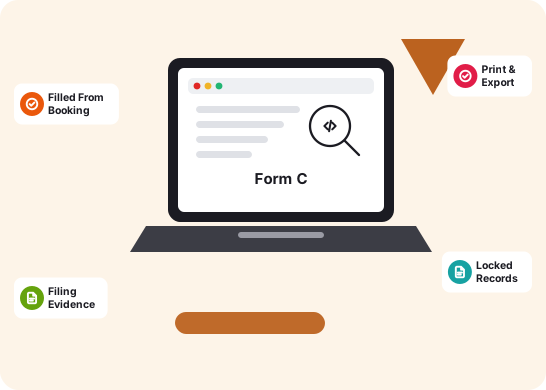
Every foreign national staying at your property brings a filing obligation with a 24-hour clock on it. StayHub prepares that paperwork from the booking you already have, records who filed it and when, and keeps the result as evidence rather than as a memory.
Why Statutory Filing Goes Wrong
The obligation is clear. The operational reality at a busy property is not:
- Passport details are copied by hand into a form, twice, under time pressure
- The 24-hour window is noticed after it has started, not before
- Police wording differs by state and sometimes by station, so a template does not fit
- Nobody records which filings were made, by whom, or with what acknowledgement
- A filed record gets edited later, which destroys its value as evidence
- When a question is asked months on, the answer depends on someone remembering
The point of doing this properly is not tidiness. It is being able to demonstrate what happened:
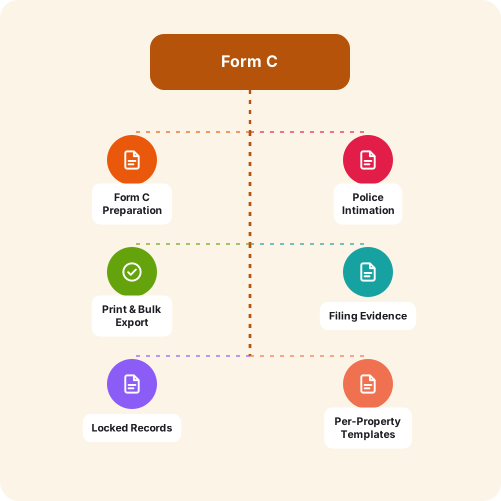
- The form is prepared from data the property already holds
- A filing carries the person, the time and the acknowledgement number
- Records are locked once filed, so they remain evidence
- Bulk export exists for the portal upload rather than retyping
- Templates match the wording your local station actually expects
- A question about a guest from last season is answered from the system
StayHub prepares Form C for the Foreigners Regional Registration Office and the local police arrival intimation directly from the booking, so the passport and stay details are not re-keyed under time pressure at the desk.
One thing worth stating plainly, because some software implies otherwise: the FRRO provides no integration route, so no product can genuinely submit on your behalf. StayHub prepares the filing, produces what the portal expects, and records the outcome. Anything claiming automatic submission is worth questioning.
Want to see it on your own data?
We run walkthroughs against a real scenario, not a canned slide deck. Contact Xcodefix Global to arrange one.

How Compliance Works in StayHub
Prepared
Statutory fields are filled from the guest’s booking and passport record, so the form starts complete rather than blank.
Produced
The form prints, and the bulk-upload file exports in the shape the portal expects, which removes the retyping that causes most errors.
Recorded
Who filed it, when, and the acknowledgement number are stored against the stay, and the record locks so it stays evidence.
What the Compliance Module Covers
Where This Matters Most
Properties With Regular Foreign Arrivals
In hill-station, coastal and heritage markets the filing obligation recurs weekly, which makes a manual process a standing risk rather than an occasional chore.
Properties That Have Been Asked to Prove It
Once a property has been asked what it filed and when, the value of a locked, timestamped record stops being abstract.
Groups With Several Stations to Satisfy
Where properties sit under different police jurisdictions, per-property templates are the difference between workable and unusable.
How Compliance Is Configured
Confirm What Your Station Expects
We start from the wording and format your local station actually asks for, because that varies more than the regulation suggests.
Set Up the Templates
Form C and the intimation template are configured for the property, and remain editable as local expectations change.
Connect Guest Data
The statutory fields are mapped to the booking and guest record so forms are prepared rather than typed.
Run a Live Arrival
We walk through a real foreign arrival end to end, including the print, the export and the locked record.
Review the Evidence Trail
We check that a filing from a week earlier can be produced on demand, which is the only test that actually matters.
Why Properties Trust This Part to Us

Filled From Real Data
The form is built from the booking the property already holds, which removes the transcription step where most errors enter.

Records That Stay Evidence
Filed entries lock. That is a deliberate constraint, and it is the difference between a record and a note.

Editable Where It Has to Be
Police wording varies by state and station. Templates are per property rather than fixed, because a rigid template is unusable in practice.

Built by a Compliance Firm
Xcodefix Global’s main business is healthcare IT, security and regulatory compliance. This module reflects how we treat evidence elsewhere.

Made for the 24-Hour Window
The work is prepared at the point of arrival rather than gathered afterwards, which is what makes the window achievable on a busy day.

Answerable Months Later
A question about a guest from last season is answered from the record, not from whoever happened to be on duty.
Statutory Filing Support for Properties Across India
Particularly relevant to resorts and hotels in hill-station, coastal and heritage markets, where foreign arrivals make Form C and police intimation a routine weekly obligation rather than an occasional one.
- Bengaluru, Karnataka
- Coorg & Chikmagalur
- Goa
- Ooty & The Nilgiris
- Kochi, Kerala
Make the Filing Provable
The exposure in statutory filing is rarely the form itself. It is being unable to show what was filed, by whom, and when.
We will walk through a real arrival end to end: preparing the form, producing the export, and what the locked record looks like afterwards.
Contact Xcodefix Global to arrange a demonstration.
Request a Demo