
Services
Products
Website IntelligenceLive analytics, chat & leads
Hotels & ResortsNewFront desk, bookings & compliance
Messaging for ResellersPartnerSell SMS & WhatsApp as your own
People & HRHiring to exit, one portal
Privacy TrainingNewDPDP Act training for teams
All products
About us Clients Our approach Contact
Book a free consultation +91 95003 00734
Cybersecurity & Threat Intel

Remote Dental IT Support for Houston Practices

For Houston dental offices that want security, backups and HIPAA and Texas HB 300 compliance handled by specialists. Our engineers in Coimbatore and Chennai, India, monitor, harden and document your systems remotely. We do not send technicians on site, so keep a local technician for hardware and cabling.

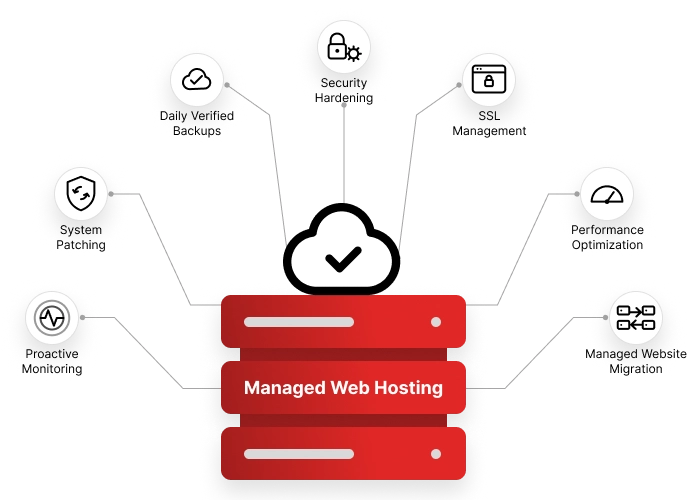
Managed server diagram showing daily verified backups, security hardening, system patching and proactive monitoring, the remote work behind dental IT support
Standards and technologies
  • HIPAA Security Rule
  • Texas HB 300
  • Tex. Bus. & Com. Code 521
  • Dentrix, Eaglesoft, Open Dental
  • MFA and email security
  • Tested backups
Challenges

What a Dental Office Can Hand to a Remote Team

Dental IT work splits into jobs someone has to touch and jobs that can be done over a secure connection. We take only the second kind, and say so in writing up front.

Shield linking EHR, cloud, patient portal, laboratory and medical device systems, the connected pieces a dental office must secure

Work That Never Needed a Visit

Configuration, not hardware, holds most of the risk:

  • Who can open the practice-management database, and whether each login has a second factor
  • Whether last night's backup ran, is encrypted, and has ever been restored
  • Patch levels on the server and the front-desk and operatory workstations
  • Phishing filtering and forwarding rules on the office mailboxes
  • The risk analysis, policies and HB 300 training records an investigator would ask to see

What Stays With Your Local Technician

We do not offer on-site visits or break-fix repair. Keep a local technician for:

  • Replacing failed servers, drives, workstations and printers
  • Cabling, Wi-Fi access points and phone systems
  • Installing intraoral sensors, imaging units and chairside hardware
  • Hands-on recovery when a machine will not start

When a fix needs hands, we send that technician written steps and stay on the call.

Every task on that first list is handled from Coimbatore and Chennai, India, through monitoring, video calls and written reports; we have no Houston office or field staff. The security work draws on our threat intelligence and incident response service.

Already have someone who fixes the hardware?

Good. Keep them. Tell us how your office is set up and we will reply within one business day with what we would take on remotely.

contact us
WHO DOES WHATXcodefix, remotely vs Your local technician, on site
AspectXcodefix, remotelyYour local technician, on site
Failed server or workstationReads logs and monitoring data, then sends written repair stepsReplaces the part and brings the machine back
BackupsSets up encrypted daily backups, a copy outside Houston and scheduled restore testsSwaps any local backup drives you keep
Email and loginsPhishing filtering, MFA, account and forwarding-rule reviewsUsually not involved
HIPAA and HB 300 paperworkRisk analysis, policies, training and signed recordsUsually not involved
Ransomware or suspected breachSame-day response, containment guidance, forensics, notification timelineUnplugs or reimages machines on our instructions
Sensors, cabling, Wi-Fi, phonesNot offeredInstalls and repairs

No local technician yet? Line one up before you need one. Remote work can find a fault; it cannot carry a drive into your server closet. An AWS migration of the server removes part of that burden.

Overview

Texas Rules That Sit on Top of HIPAA

HIPAA reaches any dental office that sends claims electronically. Texas adds a wider privacy statute, its own breach clock and a records-retention rule, each shaping how we configure systems.

Document with a shield representing Texas HB 300 requirements

HB 300 and Chapter 181

Health and Safety Code chapter 181 covers anyone who stores, transmits or comes into possession of PHI, including contractors. Each employee must be trained on state and federal privacy law within 90 days of hire, and within a year of a material change in the law, then sign a statement the practice keeps for six years.

Medical ID card representing electronic records requests

Electronic Records in 15 Business Days

When your system can produce it, a patient's written request for an electronic copy of their record must be met within 15 business days under section 181.102. The dental board's rule allows 30 days for copies, so the shorter electronic deadline is the one to plan around. Since 1 September 2025, section 181.105 also requires posted instructions for requesting records and filing complaints.

Two speech bubbles with arrows representing Texas breach notification deadlines

Breach Notice in Texas

Business and Commerce Code section 521.053 requires notice to affected people without unreasonable delay and within 60 days of determining a breach occurred. If 250 or more Texans are affected, the Attorney General must be told within 30 days through an online form, and the AG publishes a list of reported breaches. Health information that identifies a patient counts as sensitive personal information.

Database cylinder with a checkmark representing dental record retention

Records Kept Five Years or Longer

The State Board of Dental Examiners requires records to be kept at least five years from the last treatment, or until age 21 for a patient last treated as a minor if that is longer. Backup retention and data migrations must respect that clock.

Shield with a checkmark representing the HIPAA Security Rule

The HIPAA Security Rule

The Security Rule requires a thorough risk analysis, a data backup plan, a disaster recovery plan, unique user IDs and workforce security training. HHS proposed a major revision in January 2025; as of 1 November 2026 no final rule has been published, and the federal agenda lists it as a long-term action.

Chapter 181 civil penalties run up to $5,000 per negligent violation, $25,000 per knowing one and $250,000 where PHI is used for financial gain.

In practice

Securing Dentrix, Eaglesoft and Open Dental Environments

We are not a reseller or support partner for any practice-management vendor; the vendor stays your first call for application faults. We secure the server, logins, backups and network around it.

Open Dental

Open Dental runs on a MySQL or MariaDB database and, since version 24.4, is proprietary rather than GPL-licensed. Its manual calls for a unique login per person, documents permission groups and an audit trail, and recommends daily, encrypted backups tested on a computer off the office network. We confirm each is switched on and working.

Dentrix and Ascend

Henry Schein One sells Dentrix and Ascend by Dentrix, which it describes as cloud-based. An on-premises install keeps the database server in your office, so patching, access and backups fall to the practice. A cloud system moves the work to logins, MFA, browsers and the workstations used to reach it.

Eaglesoft

Patterson Dental sells and supports Eaglesoft, a server-based system. The machine holding its database is the asset to protect first: limited remote access, a patched operating system, monitored logins and an off-site backup.

Services

Remote Services for Houston Dental Offices

HHS's 405(d) guidance lists social engineering and ransomware among the top five threats to healthcare organizations and has a volume for practices with one to ten physicians. Its ten practices are the checklist behind these services.

Monitoring and Alert Investigation

We collect logs and endpoint alerts from the server and workstations and investigate what matters, from repeated failed logins to unfamiliar software at the front desk.

Backups and Ransomware Recovery

Encrypted daily backups of the practice database and imaging folders, a copy kept outside Houston, and scheduled restore tests. When Hurricane Beryl struck in July 2024, CenterPoint reported more than 2.26 million customers without power at the peak; a backup that sits only beside the server shares its fate.

Email Security and MFA

Phishing filtering, MFA on email and remote access, and reviews of mailbox forwarding rules and shared inboxes. Staff get phishing simulations from our security awareness training program, with results you can show an auditor.

HIPAA Risk Analysis and Policies

The Security Rule's risk analysis, scoped to a dental office rather than a hospital, and the policies it leads to, drawn from our HIPAA compliance consulting.

HB 300 Training With Signed Records

Short training on Texas and federal privacy law for every new hire inside the 90-day window, refreshers after material changes in the law, and signed completion statements filed for six years.

Moving the Server Off Site

If your server is aging, we can plan a move of the practice-management workload to AWS where the vendor supports it, with encryption, least-privilege access and logging, or help you weigh a move to a cloud-based system.

Process

How Remote Support Runs on Houston Time

Houston is on Central Time. From 1 November 2026 to 14 March 2027 the clocks read UTC−6, so India (UTC+5:30, no daylight saving) is 11 hours 30 minutes ahead. From 14 March 2027 Houston moves to UTC−5 and the gap narrows to 10 hours 30 minutes.

Plan your project
  1. 1

    Remote Assessment

    A video walkthrough with your office manager, then a read-only review of accounts, backups, patches, mailboxes and HIPAA documents. You get a written findings list ranked by risk, the starting point for a full HIPAA risk assessment.

  2. 2

    Changes After Hours

    An Indian working day of 9:30 a.m. to 6:30 p.m. IST equals 10:00 p.m. to 7:00 a.m. in Houston during Central Standard Time, so updates and restarts on the server run while the operatories are empty.

  3. 3

    Monitoring and Monthly Reporting

    Serious alerts go to the contact you name. A monthly written report covers backup and restore results, patch status, account changes and open risks.

  4. 4

    Incident Response

    Security incidents get a same-day response. We guide containment remotely, brief your local technician on any hands-on work, and track the Texas and HIPAA notice deadlines with you.

Live calls: We book video reviews at the start of your day. 8:00 a.m. in Houston is 7:30 p.m. in India under Central Standard Time and 6:30 p.m. under Central Daylight Time, so a short call fits before the first patient arrives.

Why Xcodefix

Why Xcodefix for a Dental Office's Security Work

Hands holding a heart with a medical cross representing a healthcare-focused IT team

Rooted in Healthcare IT

Healthcare technology has been our main field since the company began in 2008, so PHI handling, risk analysis and breach rules are everyday work.

Stopwatch with speed lines representing same-day security incident handling

Same-Day on Incidents

A suspected ransomware infection or breach gets a same-day response. Other enquiries get a reply within one business day.

Hand signing a document representing written scope of remote and on-site work

Written Boundaries

A short document lists what we cover remotely and what your local technician covers, so no task falls between vendors.

Outlined shield with a checkmark representing Business Associate Agreements covering PHI

A BAA When We Touch PHI

When our work involves access to protected health information, we sign a Business Associate Agreement.

Monitor displaying a shield representing combined compliance and engineering work

Compliance and Engineering Together

The people who write your risk analysis also fix the findings, so advice arrives with the configuration work.

Gear around a person representing in-house engineering staff

Engineers on Staff

More than 60 in-house engineers and developers, with solution architects leading each engagement.

Remote dental IT

Find Out What You Could Hand Over

Tell us how many workstations you run, which practice-management system you use and who handles your hardware today. Within one business day you will have our view of what we would cover remotely, what should stay local, and the first risks we would check.

Prefer email? info@xcodefixglobal.com

Request a Remote Review

Fields marked with an asterisk are required.

A few sentences is enough — we'll ask follow-up questions.

We use your details only to reply. See our privacy policy.
Frequently asked questions

Dental IT Support Questions From Houston Practices

Talk to the specialist who would scope the work — not a call-centre script.

Ask us directly
Does HIPAA apply to dental offices?

Yes, for most practices. HIPAA covers any health care provider that transmits health information electronically in a standard transaction, such as an insurance claim, so a dental office filing claims electronically is a covered entity. In Texas, chapter 181 of the Health and Safety Code reaches further still, covering anyone who handles or comes into possession of PHI.

What is the HB 300 training deadline for new dental employees?

Ninety days. Texas Health and Safety Code section 181.101 requires each employee to complete privacy training within 90 days of hire, and again within a year of a material change in law that affects their duties. Each employee signs a statement, kept for six years. Pages citing 60 days or training every two years describe the law before a 2013 amendment.

How much does dental IT support cost in Houston?

Some providers publish flat monthly prices. On 1 November 2026, DDS Tech Pro's pricing page listed $999 a month for ten or fewer workstations, and Siotek's listed $399 a month for up to ten. Prices change, so confirm them with each vendor. We price remote security and compliance work after a short review.

Can dental IT support be fully remote?

Security, monitoring, backups, email protection, patching, compliance work and HIPAA penetration testing can all be done remotely, and that is the service we offer. Hardware cannot. Failed drives, new workstations, sensor installs, cabling and Wi-Fi still need someone in the building, so a Houston practice using us should keep a local technician for that work.

What should a Texas dental office do after a ransomware attack?

Disconnect affected machines from the network without wiping them, then call your incident responder. If unsecured PHI may have been exposed, HIPAA requires notice to patients without unreasonable delay and within 60 days of discovery, and Texas law requires notice within 60 days of determining a breach, with the Attorney General told within 30 days when 250 or more Texans are affected.

How long must a Texas dentist keep patient records?

At least five years from the last date of treatment under the State Board of Dental Examiners rule, 22 TAC 108.8. For a patient last treated before age 18, keep the records until the patient turns 21 or for five years, whichever is longer. Other laws can require longer, so set backup and archive retention to the longest rule that applies.

Is Open Dental HIPAA compliant?

No software is HIPAA compliant on its own; compliance depends on how the practice configures and runs it. Open Dental supplies the tools: unique user logins, permission groups, an audit trail of user actions, and backup guidance that calls for daily, encrypted copies. The practice still has to use them, document a risk analysis and protect the server.

Do we need a Business Associate Agreement with our IT provider?

If the provider creates, receives, maintains or transmits PHI for you, for example by managing the server or holding your backups, HIPAA treats it as a business associate, and you need a signed agreement. Ask for one before granting access. We sign a BAA whenever our work involves access to protected health information.