

Services
Products
Website IntelligenceLive analytics, chat & leads
Hotels & ResortsNewFront desk, bookings & compliance
Messaging for ResellersPartnerSell SMS & WhatsApp as your own
People & HRHiring to exit, one portal
Privacy TrainingNewDPDP Act training for teams
All products
About us Clients Our approach Contact
Book a free consultation +91 95003 00734
Compliance, Risk & Governance

HIPAA Risk Assessment Services That Hold Up to OCR

For covered entities and business associates that need the Security Rule risk analysis done properly, not filled in. We inventory where your ePHI lives, rate each threat and vulnerability by likelihood and impact, and hand over a risk register and remediation plan your team can act on and an investigator can follow.

Healthcare risk framework diagram linking NIST CSF, HIPAA and HITECH, MITRE ATT&CK, CIS Controls, threat detection and control validation, the inputs to a HIPAA risk assessment
Standards and technologies
  • 45 CFR 164.308(a)(1)
  • NIST SP 800-66 Rev. 2
  • NIST SP 800-30
  • Risk Register
  • Risk Management Plan
  • HHS SRA Tool
Challenges

Why Risk Analyses Fall Short in an OCR Investigation

One finding recurs across OCR's recent resolution agreements: no accurate and thorough risk analysis.

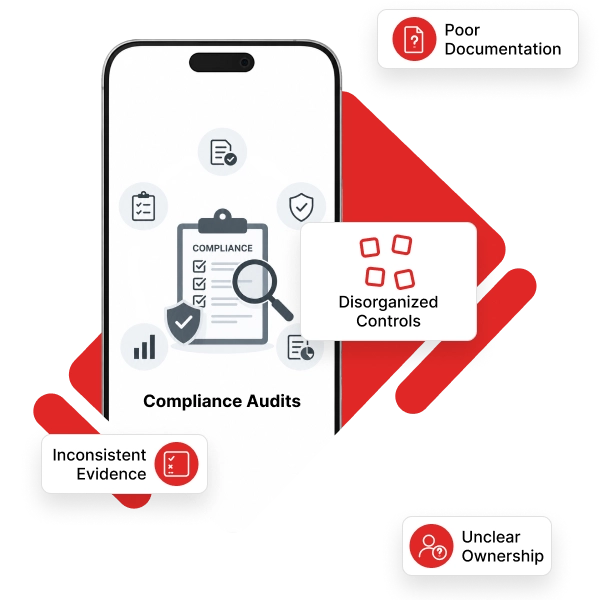
Compliance audit clipboard flagged for poor documentation, disorganized controls, inconsistent evidence and unclear ownership, typical weaknesses in a HIPAA risk analysis

What Investigators Look For

  • A written analysis covering all ePHI, not one system
  • Threats and vulnerabilities identified for your environment, not copied from a template
  • Likelihood, impact and a risk level for each pairing
  • A risk management plan showing what was done about high risks, and when
  • Evidence the analysis was revisited after changes or incidents

Shortcuts That Fail

  • A questionnaire answered by one person in an afternoon
  • Scope that skips cloud apps, website forms, patient texting, AI chat assistants, laptops and home workers
  • Findings with no owner, date or budget
  • An analysis last touched before a migration, merger or breach
  • Scan results filed away instead of feeding the ratings

Our HIPAA compliance consultants run the analysis with your IT, clinical and operations leads, then help close the gaps it finds. You get a document your security officer can defend, not a score.

Has your analysis gone stale?

Send the date of your last risk analysis and what has changed since. We will say whether an update or a full redo makes sense.

contact us
Overview

What the Security Rule Requires

Risk icon for the required HIPAA risk analysis

Risk Analysis, 164.308(a)(1)(ii)(A)

Required: an accurate and thorough assessment of potential risks and vulnerabilities to the confidentiality, integrity and availability of the ePHI you hold. HHS guidance says scope covers ePHI on every kind of electronic media, from a single workstation to networks spanning several sites.

Prioritization icon for HIPAA risk management

Risk Management, 164.308(a)(1)(ii)(B)

Also required: security measures sufficient to reduce those risks and vulnerabilities to a reasonable and appropriate level. The analysis is the input; risk management is the work that follows it.

Documentation icon for retained risk analysis records

Documentation, 164.316(b)

The assessment must be in writing, available to the people who act on it, reviewed when operations change, and kept for six years from creation or the date it was last in effect.

Standards icon for HHS risk analysis guidance

No Mandated Method or Interval

HHS states the Rule does not prescribe a methodology or a frequency. Its guidance treats the process as ongoing, notes that some entities repeat it annually or as needed, and expects new analysis after incidents, ownership changes or new technology.

In practice

OCR's Risk Analysis Initiative in Practice

OCR created the initiative to focus selected investigations on the risk analysis provision. Three resolutions show the pattern.

Comprehensive Neurology, April 25, 2025

A small New York practice hit by ransomware that made ePHI for about 6,800 people inaccessible. OCR found no accurate and thorough risk analysis. Settlement: $25,000 and two years of monitored corrective action, the initiative's 8th action.

MMG Fusion, March 5, 2026

A software business associate breached in 2020, exposing data on about 15 million people. Findings included the missing risk analysis and failure to notify affected covered entities. Payment: $10,000, with a three-year plan requiring a new risk analysis and a risk management plan.

Spencer Gifts Health Plans, June 18, 2026

An employer-sponsored group health plan hit by ransomware, potentially affecting PHI of 10,023 people. OCR cited the lack of an accurate risk analysis before the attack. Settlement: $450,000 and a two-year plan, the initiative's 14th action.

Entity type made no difference: a practice, a software vendor and an employer health plan were all asked for the same document, and OCR reached the same finding each time.

TOOLS VS. ASSESSMENTSRA Tool or template alone vs Facilitated risk assessment
AspectSRA Tool or template aloneFacilitated risk assessment
Designed forSmall and medium providers, per HealthIT.govAny size, including business associates and health plans
Finding ePHIWhatever the respondent remembersInterviews, system walk-throughs and data-flow mapping
Technical evidenceSelf-reported answersConfiguration reviews plus scan and test results
Threat-vulnerability pairsGeneric question bankSpecific to your systems, vendors and sites
OutputScore and reportRisk register and dated remediation plan
Official standingNeither required nor a guarantee of complianceBuilt to the elements HHS guidance lists

The SRA Tool, now at version 3.7, is a reasonable starting point for a small practice, and HealthIT.gov itself warns that the survey alone may not identify every risk. Its limit is that it records what people tell it. We often keep its structure, then test the answers against the systems.

Process

Our Method, Aligned to NIST SP 800-66 Rev. 2

NIST published SP 800-66 Revision 2 in February 2024 as its resource guide for implementing the Security Rule. We follow its seven risk assessment steps and use NIST SP 800-30 Rev. 1 for rating scales.

Plan your project
  1. 1

    Prepare and Inventory ePHI

    Scope, asset list and data-flow map covering every system, device, vendor and location that creates, receives, maintains or transmits ePHI.

  2. 2

    Identify Reasonably Anticipated Threats

    Ransomware, phishing, vendor compromise, insider misuse, outages and natural events, chosen for your environment.

  3. 3

    Identify Vulnerabilities

    Configuration reviews, scan output and any penetration test findings, alongside policy and process gaps.

  4. 4

    Rate Likelihood

    How probable each threat-vulnerability pair is, given the controls already in place.

  5. 5

    Rate Impact

    What exploitation would mean for patients, operations, finances and breach reporting.

  6. 6

    Determine Risk Level

    A likelihood-by-impact matrix, with your risk tolerance agreed before ratings begin.

  7. 7

    Document and Plan

    A risk register of every pair and rating, and a risk management plan for anything above tolerance.

On the proposed rule: HHS's January 6, 2025 proposal would require a written technology asset inventory and network map, and a written risk analysis reviewed at least every 12 months. It remains a proposal. HHS's regulatory agenda moved it to long-term actions with final action projected for July 2027, so today's rule is the one that applies.

Services

What You Receive

ePHI Inventory and Data-Flow Map

Systems, vendors, devices and locations, showing how ePHI enters, moves and leaves.

Risk Register

Every threat-vulnerability pair with likelihood, impact, risk level, owner and status.

Risk Management Plan

Prioritized remediation with owners and target dates, plus documented acceptance where a risk is kept.

Executive Summary

A short briefing for leadership on the highest risks and the decisions they require.

Evidence Pack

Interview notes, configuration evidence and scan references that show how each rating was reached.

Living Register

Optionally, the register runs in our GRC Compliance Platform, with recurring reviews scheduled so the analysis stays current.

Use cases

Who Asks Us for a HIPAA Risk Assessment

Small Practices

Clinics that worked through the SRA Tool and want their answers checked against real systems.

Digital Health and SaaS Vendors

Business associates that need an analysis covering their platform, subcontractors and staff access to customer data.

Health Plans

Group health plans and their administrators, a category OCR has penalized for missing analyses.

Organizations After an Incident

Teams recovering from ransomware or a breach, where investigators will ask for the analysis that existed beforehand.

Teams Facing Change

Ownership changes, EHR migrations and new technology, which HHS guidance names as reasons to revisit risk.

Why Xcodefix

Why Xcodefix for HIPAA Risk Assessments

Cybersecurity icon for technically verified findings

Assessors Who Work With Engineers

Our assessors sit beside security testers and cloud engineers, so technical findings are verified rather than assumed.

Support icon for remediation help

Help After the Report

We support remediation afterward, from policy rewrites to configuration changes, instead of handing over a document and leaving.

Framework icon for multi-framework compliance mapping

Evidence Reused Across Frameworks

If you also pursue SOC 2 readiness or ISO 27001, overlapping controls and evidence are mapped once.

Experience icon for senior assessors

Senior People on the Work

Founded in 2008, with 16+ partners and solution architects and an architect-led model that keeps senior staff on each assessment.

Get Started

Get a Risk Analysis You Can Defend

Tell us your size, systems and the date of your last analysis. We will propose a scope, the people we need to interview and the deliverables you will receive.

Prefer email? info@xcodefixglobal.com

Request a Risk Assessment Proposal

Fields marked with an asterisk are required.

A few sentences is enough — we'll ask follow-up questions.

We use your details only to reply. See our privacy policy.
Frequently asked questions

HIPAA Risk Assessment FAQs

Talk to the specialist who would scope the work — not a call-centre script.

Ask us directly
What is a HIPAA risk assessment?

It is the written analysis the Security Rule requires at 45 CFR 164.308(a)(1)(ii)(A): an accurate and thorough review of risks and vulnerabilities to the confidentiality, integrity and availability of your ePHI. It shows where ePHI lives, what could go wrong, how likely and harmful each scenario is, and it feeds the required risk management plan.

Is a HIPAA risk assessment required?

Yes. Risk analysis and risk management are both required implementation specifications in the Security Rule, for covered entities and business associates alike. OCR runs a Risk Analysis Initiative to enforce the provision, and the three settlements described on this page range from $10,000 to $450,000, each with a multi-year corrective action plan.

Can we use the HHS SRA Tool or a risk assessment template?

You can, and small practices often start there. HealthIT.gov says the SRA Tool targets small and medium providers, that using it is neither required nor a guarantee of compliance, and that the survey alone may not find every risk. A template only works when someone checks the answers against the actual systems.

How often is a HIPAA risk assessment required?

The current rule sets no fixed interval. HHS guidance calls the process ongoing, mentions annual or as-needed reviews, and expects fresh analysis after incidents, ownership changes or new technology. The January 2025 proposal would require review at least every 12 months, but it has not been finalized; final action is currently projected for July 2027.

What does a HIPAA risk assessment checklist include?

At minimum: scope covering all ePHI, an asset and data-flow inventory, threats and vulnerabilities, current security measures, likelihood and impact ratings, a risk level for each pairing, and written results. A risk management plan follows. A checklist keeps you from skipping steps; it does not replace evidence for each answer.

Do business associates need a HIPAA risk assessment?

Yes. The Security Rule applies to business associates directly, and OCR acts against them. MMG Fusion, a software vendor serving covered entities, settled in March 2026 after OCR found no accurate and thorough risk analysis. A vendor's analysis should cover its platform, subcontractors and staff access to customer data.

What is the difference between a risk assessment and a HIPAA audit?

A risk assessment asks what could happen to your ePHI and how serious it would be. An audit or gap assessment asks whether each required safeguard is in place and documented. The Security Rule demands the first; the second is useful before customer reviews or an OCR inquiry. We run both, often together.

How long does a HIPAA risk assessment take?

It depends on the number of sites, systems and vendors, and on how quickly your staff can join interviews. A single-site practice moves far faster than a multi-state group or a SaaS platform. We give a schedule after scoping; collecting evidence from outside vendors often takes the longest.