
Services
Products
Website IntelligenceLive analytics, chat & leads
Hotels & ResortsNewFront desk, bookings & compliance
Messaging for ResellersPartnerSell SMS & WhatsApp as your own
People & HRHiring to exit, one portal
Privacy TrainingNewDPDP Act training for teams
All products
About us Clients Our approach Contact
Book a free consultation +91 95003 00734
Healthcare IT & Interoperability

athenahealth API Integration for athenaOne Practices and Vendors

For software vendors and medical groups connecting tools to athenaOne. We explain how the platform is laid out for developers, which of its two API families to call, how to hear about changes, and how we deliver scheduling, intake, documents, billing, analytics and AI integrations. Xcodefix is independent of athenahealth and holds no partnership with it.

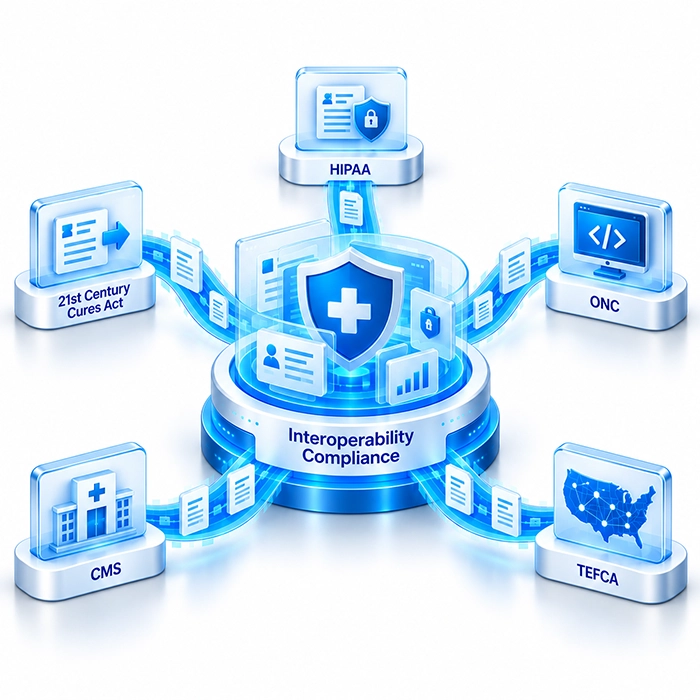
Interoperability hub linked to HIPAA, ONC certification, CMS, TEFCA and 21st Century Cures Act requirements that shape an athenahealth API integration
Standards and technologies
  • athenaOne
  • FHIR R4 (g)(10)
  • SMART on FHIR
  • OAuth 2.0
  • FHIR Subscriptions
  • HL7 v2
Challenges

What Makes athenaOne Different to Integrate With

Tablet showing complex data flows, point-to-point connections, multiple standards and patient identity management, the design questions in an athenaOne integration

One cloud, many practices

athenahealth runs athenaOne as a single-instance, multi-tenant cloud, so nothing is installed at the practice. Instead, proprietary calls name the practice in the path, as in /v1/{practiceid}/departments. Credentials are issued per environment: Preview keys reach only the Preview host and Production keys only Production. New developer accounts can call a shared Preview sandbox practice, 195900, populated with dummy data.

Two API families and a moving event model

athenahealth cites more than 800 API endpoints on its Developer Portal, split between proprietary athenaOne APIs and FHIR R4 APIs certified to the 21st Century Cures Act (g)(10) criterion. Change notification is in transition too: established changed-data subscriptions that you poll, and a newer Event Subscription Platform that pushes FHIR Subscription notifications to your webhook, which athenahealth's own repository describes as a limited alpha.

Get those two choices right and most of the build is ordinary API engineering. Our FHIR and HL7 engineers settle them at design time, before any code is written.

Building for athenaOne customers?

Describe the workflow and the number of practices; you will hear back within a business day.

contact us
PICK THE RIGHT APIathenaOne proprietary APIs vs Certified FHIR R4 APIs
AspectathenaOne proprietary APIsCertified FHIR R4 APIs
Base pathapi.platform.athenahealth.com/v1/{practiceid}/api.platform.athenahealth.com/fhir/r4
CoverageWorkflow groups: appointments, charts, documents, encounters, insurance and financial, practice configurationUSCDI data profiled by US Core, as the federal criterion defines
Writing dataRead and write, from booking appointments to recording paymentsCertification requires reads; check the reference for any write you need
App launchOAuth 2.0 credentials issued per environmentCertified SMART launch: patient standalone and provider EHR launch
PortabilitySpecific to athenahealthStandard FHIR, reusable across certified EHRs
Best forOperational workflows and write-backPatient access apps and standard clinical reads

Many products use both: FHIR for standard clinical reads that also work against Epic and other certified EHRs, and proprietary endpoints for athenaOne workflows that FHIR does not reach.

Overview

The Platform Pieces You Will Touch

Website icon for the athenahealth Developer Portal and Console

Developer Portal and Console

Register, create an app and store the secret, which is displayed once. The Console's analytics tab reports call volume, errors, practices live on your app, and rate-limit usage per second and per hour.

Testing icon for the athenahealth Preview environment

Preview environment

A separately hosted test environment with dummy data, including sandbox practice 195900. Build and break things here; Preview credentials cannot touch Production.

Server icon for the athenaOne Production environment

Production

Live practice data under HIPAA, reached with separate Production credentials and addressed one practice ID at a time.

Partner icon for the athenahealth Marketplace program

Marketplace Partner Program

athenahealth's app store, listing 590+ partners as of June 2025. Partners get a Marketplace page, co-branded marketing material and a dedicated Partner Success Manager.

Data engineering icon for athenaOne interfaces and Data View

Interfaces and Data View

HL7 and C-CDA interfaces, with custom interfaces on request, plus Data View, a SQL-queryable data store for analytics and bulk extraction that can feed a warehouse or BI tool.

Rate-limit usage is shown per app in the Console, so design against your own numbers there rather than figures quoted elsewhere.

In practice

Hearing About Changes: Polling or Events

Changed-data subscriptions

For record types that offer it, imaging results among them, you subscribe once through a /changed/subscription endpoint, to every event by default or to a named one, optionally per department. You then poll the matching /changed endpoint for new changes. A leaveunprocessed flag lets you test without consuming them.

Event Subscription Platform

Near real-time notifications built largely on the FHIR Subscriptions R5 Backport guide: rest-hook delivery, id-only payloads, and topics such as Patient.create and Appointment.check-in. You create one subscription per topic per practice, and athenahealth's API team grants the scopes.

Webhook requirements

Your endpoint must use HTTPS with a publicly trusted certificate on port 443 and should verify each message signature. Keep the handler thin: acknowledge, queue, then call back for the full resource.

Confirm event availability for your practices before designing around it, and keep a polling fallback for anything the platform does not yet publish.

Use cases

Common athenahealth Integration Patterns

Online scheduling

Show open slots and book appointments from your own site or app through the appointments workflow APIs.

Patient intake

Match or create patients, capture demographics and insurance before the visit, and react to Patient.create and check-in events.

Documents and results

Send documents to the chart and follow changes to clinical documents and imaging results through the change feeds.

Billing and payments

Show balances and record patient payments taken outside athenaOne, using the payments and insurance and financial APIs.

Analytics

Data View for SQL-level extraction into a warehouse, with FHIR or proprietary reads where fresher data matters.

AI scribes and voice agents

Read appointment and chart context before the visit, then return the draft note or call summary through the documents APIs for clinician review, triggered by events such as check-in.

For the AI pieces, our AI and machine learning team builds the language components with access controls and data security designed in, and our guide to a HIPAA-compliant chatbot covers the safeguards for patient-facing assistants.

Process

How We Deliver an athenaOne Integration

Plan your project
  1. 1

    Workflow and data map

    Each user action mapped to endpoints, fields and practice settings, choosing FHIR or proprietary per call.

  2. 2

    Build in Preview

    Development and automated tests against Preview, starting with sandbox practice 195900, reusing access tokens until they expire rather than requesting one per call.

  3. 3

    Change-detection design

    Polling intervals, event topics and replay handling sized against your rate limits, so a backlog never pushes the app over them.

  4. 4

    Distribution route

    Decide whether you will sell through the Marketplace program or serve named practices directly, and confirm Production access terms with athenahealth for that route.

  5. 5

    Production go-live

    Production credentials issued, practices brought live one at a time, and per-practice traffic watched in the Console through the first weeks.

  6. 6

    Ongoing support

    Alerts for failed calls, expired credentials and missed events, with fixes shipped through the same Preview-first path.

Timelines: access approvals and each practice's readiness usually set the pace more than the code does, so we list those dependencies at the start.

Services

What Xcodefix Delivers on athenahealth Projects

API integration builds

Scheduling, intake, documents and billing integrations on athenaOne APIs, with error handling and monitoring from day one.

FHIR and SMART apps

Apps on the certified FHIR R4 APIs using patient standalone or provider EHR launch.

HL7 interfaces

athenahealth is among the EHRs our Mirth Connect team supports for HL7 v2 exchange.

AI features wired in

Note drafting, summarization and assistant features from our AI team, or your existing scribe or voice vendor, connected to athenaOne workflows.

Security testing

Testing your app and webhook endpoint the way an attacker would, through our penetration testing service, before the first practice goes live.

If our work touches PHI, we can sign a BAA. We have no partnership with athenahealth and do not present one; access comes through athenahealth's published programs and the practices you serve.

Start here

Map Your athenaOne Integration Before You Build

Send the workflow, the data involved and whether you serve one group or many practices. We will reply with the API family for each call, a change-detection design and a delivery plan.

Prefer email? info@xcodefixglobal.com

Plan My athenahealth Integration

Fields marked with an asterisk are required.

A few sentences is enough — we'll ask follow-up questions.

We use your details only to reply. See our privacy policy.
Frequently asked questions

athenahealth Integration Questions

Talk to the specialist who would scope the work — not a call-centre script.

Ask us directly
What is athenahealth API integration?

It is connecting your software to athenaOne, athenahealth's cloud platform for EHR, billing and practice management, and patient engagement, through its APIs. Most projects use proprietary athenaOne endpoints for workflows such as scheduling and payments, the certified FHIR R4 APIs for standard clinical data, and sometimes HL7 interfaces or Data View for bulk and analytics work.

Does athenahealth have a FHIR API?

Yes. athenahealth offers FHIR R4 APIs certified to the 21st Century Cures Act (g)(10) criterion, at api.platform.athenahealth.com/fhir/r4 in Production with a matching Preview host for testing. Both the patient standalone and provider EHR SMART App Launch flows were certified. Workflows outside the certified data set use the proprietary athenaOne APIs instead.

How do I get athenahealth API access?

Register on the athenahealth Developer Portal and create an app to receive Preview credentials, which work against the shared sandbox practice 195900. Production credentials are issued separately and only work against Production. Vendors planning to sell to many athenaOne practices should also look at the Marketplace Partner Program, which covers listing and promotion.

What is the athenahealth Preview environment?

Preview is athenahealth's separately hosted test environment, populated with dummy data instead of real patient records. Developers build and test there before Production, and credentials are environment-specific, so Preview keys cannot reach live data. New accounts can call the global sandbox practice, 195900, straight away from the browser or from Postman.

What is a practice ID in athenahealth?

A practice ID, which athenahealth also calls a context ID, identifies the athenaOne practice you are working with, and most proprietary API paths include it, for example /v1/{practiceid}/departments. An app serving several practices calls each with its own ID, and event subscriptions are created per practice too. The Preview sandbox practice is 195900.

Does athenahealth support webhooks?

Yes, through its Event Subscription Platform, which sends FHIR Subscription notifications to an HTTPS webhook on port 443. Payloads carry resource IDs only, so your service calls back for the details. athenahealth's documentation describes the platform as a limited alpha with scopes granted by its API team, and changed-data polling remains the established alternative.

What are athenahealth API rate limits?

athenahealth shows each app's rate-limit usage, per second and per hour, in the Developer Console's analytics dashboard alongside call volume and errors. Read your app's limits there rather than trusting figures quoted online, reuse access tokens until they expire, and spread polling evenly instead of sending bursts that trip the per-second ceiling.

Can AI scribes and voice agents integrate with athenahealth?

Yes, through the same APIs as any other app. A typical design reads appointment and chart context before the visit, then sends the draft note or call summary back for clinician review, triggered by events such as check-in. Recordings and transcripts contain PHI, so every speech or language vendor in the chain needs a BAA.